Beneq launches Beneq Transform XP – Redefining atomic control in AL
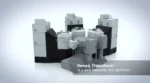
Second-generation platform delivers advanced control, in-cycle annealing, and high-throughput performance for Wide Bandgap power and RF device manufacturing Espoo, Finland – Beneq introduces the Beneq Transform XP, a second-generation ALD platform developed to meet the performance demands of Wide Bandgap (WBG) power and RF device technology development and manufacturing. Building on the proven Beneq Transform platform, the new system adds advanced ALD control, faster cycle times, and greater process capabilities in a high-throughput format. The Beneq Transform XP features a second-generation, flow-optimized 25-wafer mini-batch thermal ALD reactor that achieves breakthrough deposition rates with single-digit-second cycle times for common ALD oxides and nitrides. Refined flow and pressure dynamics ensure exceptional within-wafer and wafer-to-wafer uniformity – even at a few nm film thicknesses – while precise dwell-time control delivers excellent conformality on high-aspect-ratio structures. Transform XP also introduces advanced PEALD process control to precisely manage low-energy ions. This enables optimized plasma pre-cleaning and deposition, resulting in improved interface quality, tunable passivation, and enhanced device performance and reliability. The system integrates in-cycle annealing, a proprietary step that densifies and purifies films to achieve stoichiometric, low-impurity materials and crystalline alignment, such as AlN lattice orientation. “Transform XP is our response to the next wave of device challenges in power and RF manufacturing,” said Dr. Mikko Söderlund, Head of Sales, Semiconductor ALD at Beneq. “Customers value the original Transform® for its versatility and reliability. With XP, we introduce capabilities they specifically asked for – improved ion control, faster cycles, and in-cycle film densification – all in a versatile platform.” With over a dozen Beneq Transform clusters installed globally for WBG pilot and production use, and more than 100 process modules shipped, Beneq continues to support leading IDMs, foundries, and RTOs advancing More-than-Moore technologies.