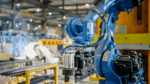
AI startups drive manufacturing transformation with automation and sustainability solutions
The global manufacturing sector is undergoing rapid transformation with artificial intelligence (AI) driving factory automation across the value chain, including product development, operations, process optimisation, and quality control. AI-focused startups are leading this shift with technologies such as AI-powered collaborative robots (cobots), real-time production simulations, generative design, predictive analytics, and intelligent systems. These innovations boost efficiency, flexibility, and precision while advancing sustainability goals across the manufacturing industry. “AI in Manufacturing: Startups Driving Factory 4.0,” spotlights the key startups transforming the sector, highlighting how their AI-powered solutions are driving smart factory innovations, reducing downtime, and enhancing productivity and precision across the entire value chain. Tejal Hartalkar, Senior Disruptive Tech Analyst says “As AI-driven innovations continue to evolve, the manufacturing sector is assured to benefit from enhanced production, reduced waste, and more sustainable production practices. Startup-led innovations are not only streamlining manufacturing processes but also improving operational decision-making with AI-powered insights. “By reducing turnaround time, ensuring quality control, and accelerating design processes, startups are creating the foundation for smarter and more effective factories.” The innovative technologies from startups in the AI manufacturing space are reshaping the traditional production environment. Some of the key startups offering AI-driven solutions across various aspects of the production environment include: Product development Vention, a Canadian startup, offers a cloud-based manufacturing automation platform that allows users to design, automate, and deploy factory equipment within a single environment. Its platform integrates AI-powered 3D machine builder software, enabling engineers to design and assemble custom equipment. Cognitive Design Systems, a French startup, is engaged in the development of an AI-powered platform that offers 3D modeling and numerical simulation to form, sketch, structure, plan, conceptualize, and create. Operations Bright Machines, a US-based startup, specialises in modular, software-defined micro-factories that combine robotics, computer vision, and machine learning (ML) to automate assembly and inspection […]